Chain, Showdown, and Scoring Points Explained – Riftbound Biginner Guide

Hey everyone! Riftbound is Riot Games’ new trading card game, bringing a unique playstyle with deep mechanics for us to enjoy. It’s the League of Legends TCG, designed for 2–4 players, where the goal is to conquer battlefields, hold them, and score points.
For clarity, I’ll mainly focus on 1v1 gameplay when explaining interactions and mechanics. I’ll briefly touch on these as we go, but it will also help if you get familiar with the different card types, how units are played, and the keywords that appear on cards.
Gameplay Wordings
We’ll use these terms throughout the guide; here’s exactly what they mean.
Focus:
- What it is: Permission to start plays at Action timing during a Showdown. When you gain Focus, you also gain Priority. Only the player with Focus can start a new play/chain while the Showdown is Open (no Chain).
- Who gets it first: In a Combat Showdown, the Attacker gets Focus first.
- How it moves: After the current Chain in the Showdown fully resolves—or if nobody adds anything—Focus passes to the next relevant player.
Neutral Open:
- What it is: No Showdown in progress (Neutral), and no Chain exists (Open).
- What you can do: On your turn, you may play Neutral-only, Action, and Reaction cards (and activate appropriately timed abilities). Your opponent can’t start a Chain until you do something that creates one.
Chain Explanation
A Chain is a stack of spells and abilities that resolve last-in, first-out. A Chain can start during a Showdown, when a player plays a spell, or when a triggered ability goes on the chain. Players add spells and abilities in priority order. In Open (no Chain), the Focus holder may start a play at Action timing (they can also play Reactions). If a Chain exists (Closed), only Reactions can be added—and only by whoever has Priority. When both players pass in succession, the top object resolves (last card played on the chain); then priority returns, and the process repeats.
Who can add what to the Chain?
- Outside Showdowns (Neutral): only the active player can start a new chain. The non-active player may respond with Reactions once the chain exists.
- During a Showdown: the player with Focus may start plays at Action timing (Action or Reaction) when the state is Open (no Chain). When a Chain exists (state is Closed), only Reactions can be added—and only by the player who currently has priority.
What is a Showdown?


A Showdown begins when a battlefield becomes contested in a Neutral Open state—either because opposing units are present (Combat) or units moved to an empty battlefield (no Combat). In Combat showdowns, the Attacker is the player who created the Contested state; the other player is the Defender. The Attacker gains Focus first.
Priority alternates as players add to/resolve the chain. In a Closed state (a Chain exists), only Reactions can be played by whoever has priority. When the Chain fully resolves, the state returns to Open and Focus passes; the new Focus holder may start another play (Action timing), or players can pass through to combat damage.
Showdown → Combat Damage → Resolution → Cleanup
- At the start of the Combat Showdown Step:
• Assign Attacker/Defender and apply combat mods/keywords (e.g., Assault/Shield).
• Then, if any ‘When I attack/defend’ triggers exist, they create the Initial Chain.
• If no such triggers exist, the Showdown begins Open (no Chain). - At the start of the Showdown, the Attacker gains Focus (which also gives them Priority). While the state is Open (no Chain), only the Focus holder may play an Action or Reaction card.
Once a Chain exists, the state is Closed; in Closed, players may add only Reactions when they have Priority. When the Chain fully resolves, Focus passes to the next relevant player; in the now-Open state, that player may start a new play (including Action) or pass to move to combat damage. (If ‘When I attack/defend’ triggers exist, they create an Initial Chain first, so the Showdown can start Closed.) - Combat damage will be the sum of the total Might of units at the battlefield for each player, and they can decide how to distribute that damage. If no defending units remain and attacking units do, the battlefield is Conquered and you score 1. After the combat is over, all damage on units is removed in the cleanup. If totals are equal and damage is lethal both ways, both sides can be wiped.
Spell Speeds & When You Can Play
Three types of spells:
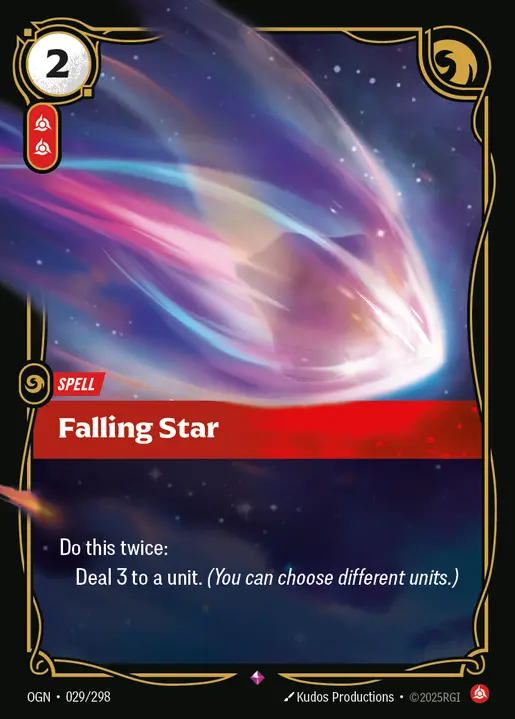
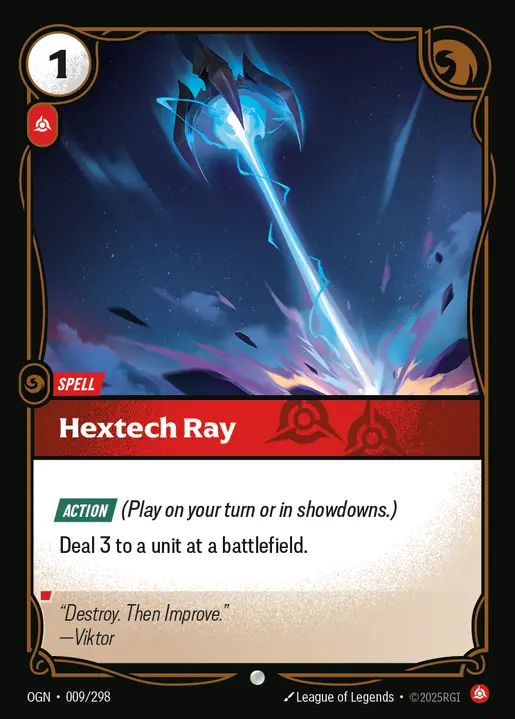
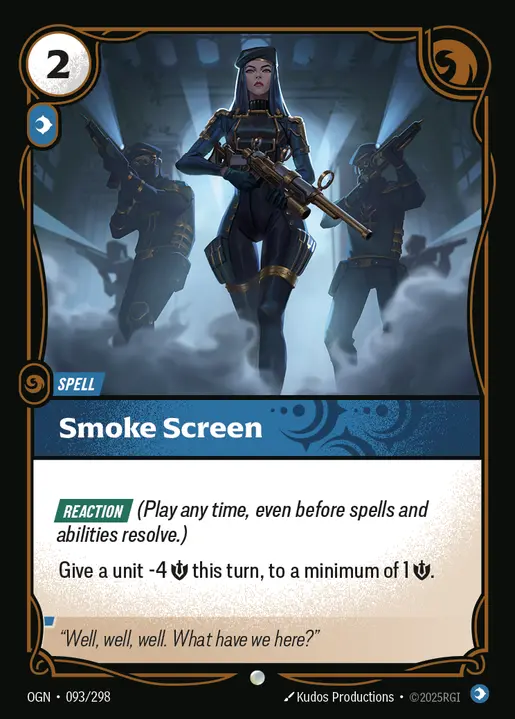
Spells come in three timings: Neutral-only (no keyword), Action, and Reaction.
1- No speed (Neutral) Spell
No speed spells can be played only on your turn, in Neutral (not during a Showdown), and only when no Chain is open.
Examples:
- It’s your opponent’s turn. You cannot play Falling Star at all.
- You just started your turn. You can play Falling Star and start a chain.
- After you return to Neutral Open on your turn (e.g., after Combat/Cleanup), you can play Falling Star and start a Chain.
- You just attacked and started a Showdown. You cannot play Falling Star.
- Your opponent just attacked and started a Showdown. You cannot play Falling Star.
- You played a spell and started a chain. You cannot play Falling Star until the chain resolves.
2- Action Spell
Action spells can be played on your turn in Neutral Open, and during Showdowns only when you have Focus (on either player’s turn); during a Closed state (a Chain exists), you can’t add an Action spell—only Reactions may be added by whoever has Priority
Examples:
- It’s your opponent’s turn. You can play Hextech Ray during a Showdown only when Focus passes to you.
- You just started your turn. You can play Hextech Ray and start a chain.
- You just conquered a battlefield and gained a point. You can play Hextech Ray and start a chain.
- You just attacked and started a Showdown. You can play Hextech Ray.
- Your opponent attacked, started a Showdown, and passed Focus. You can play Hextech Ray.
- During a Showdown, if your opponent starts a Chain, you cannot play Hextech Ray until that Chain resolves and Focus passes to you.
3- Reaction Spells
- Reaction spells can be added to any existing Chain (i.e., in a Closed state) whenever you have priority—on either player’s turn, including during Showdowns.
Scoring Points
Conquering a battlefield scores 1 point immediately. You also score 1 point for each battlefield you still control at the Beginning/Scoring step of your next turn (this is a Hold).
You may always win your last point by Holding. If you try to win your last point by Conquering, you only get it if you have already scored all other battlefields this turn; otherwise, you draw a card instead.